Nan Madol at Pohnpei: a Micronesian site
Locate Nan Madol at Pohnpei, understand UNESCO’s account of this ceremonial centre, and distinguish archaeological facts, narratives and interpretations.
Pasifika AI / Kanaky Tech ·
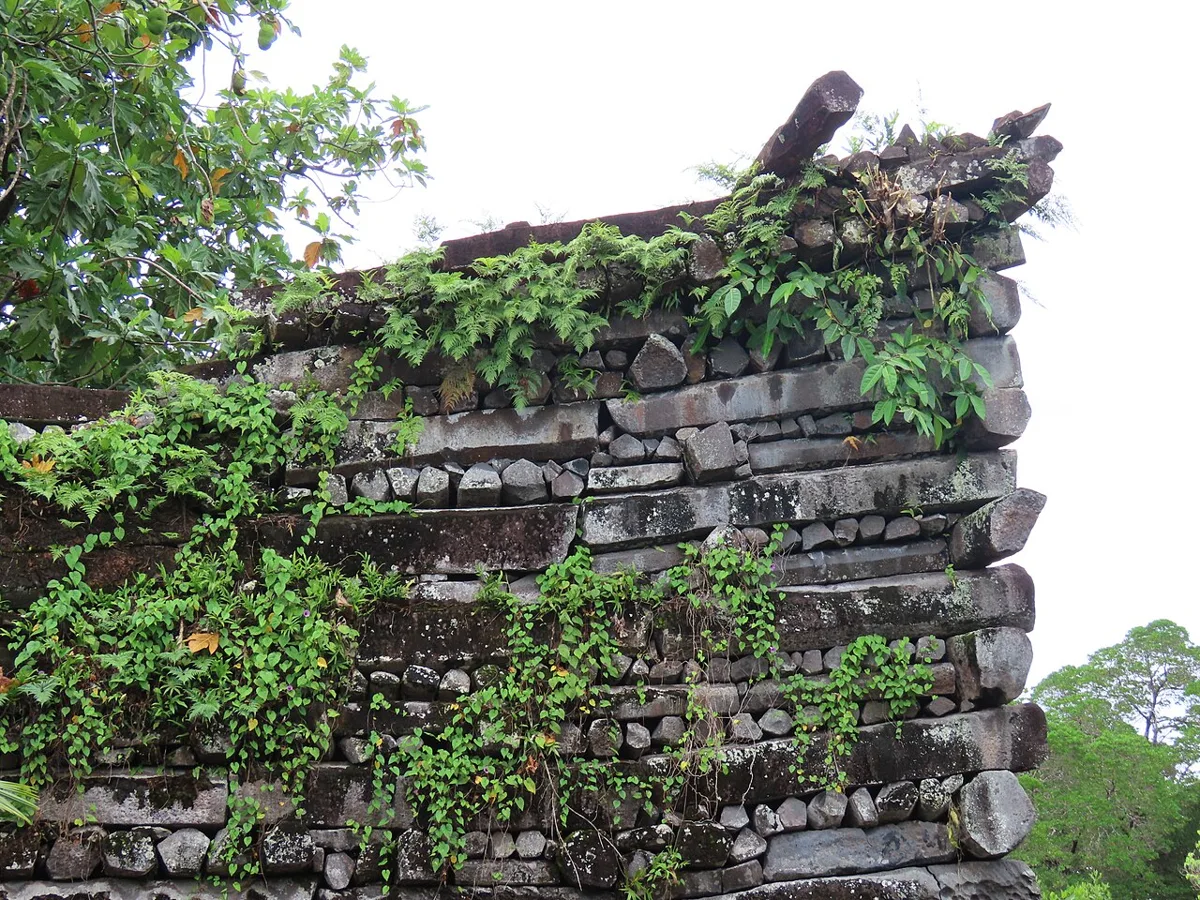
Stone structures at Nan Madol. Their historical interpretation is attributed to the heritage source, not inferred from the photograph.
Uhooep · Image record · CC BY-SA 4.0 · Resized and converted to WebP.
Where is Nan Madol?
Nan Madol lies off Pohnpei’s south-eastern coast in Micronesia. UNESCO describes constructed islets of basalt and coral with remains of a ceremonial centre associated with the Saudeleur dynasty.
Source : UNESCO World Heritage Centre — Nan Madol, dossier 1503
Which remains are described?
The record identifies palaces, temples, tombs and residential areas dating between 1200 and 1500 CE.
Source : UNESCO World Heritage Centre — Nan Madol, dossier 1503
Avoid sensational explanations
Research guidance · Pasifika AI
To assess a video about Nan Madol, isolate testable claims: location, material, period and the author of a hypothesis. Seek a reference for each. An open question is not evidence for the most spectacular explanation. If an oral account is mentioned, retain its attribution rather than treating it as either a mere mistake or an excavation finding.
Prepare research or a visit
Research guidance · Pasifika AI
For research, start with the heritage file and its documentation. For a visit, seek current guidance from local managers: a historical record does not necessarily provide today’s access arrangements. In Pasifika AI, ask for an explicit separation between documented facts, attributed accounts and information still requiring verification.
Try a closer reading
Research guidance · Pasifika AI
Prepare a two-part caption: what the photograph visibly shows, then what UNESCO documents about the site. Avoid sensational labels such as a lost city built by an unknown people. Keep Pohnpei and the heritage record visible, and consult current custodians for access arrangements.