Cook Islands tīvaevae: textiles and transmission
Explore Cook Islands tīvaevae through a named example at Te Papa, distinguishing textile technique, the maker and the history of the object.
Pasifika AI / Kanaky Tech ·
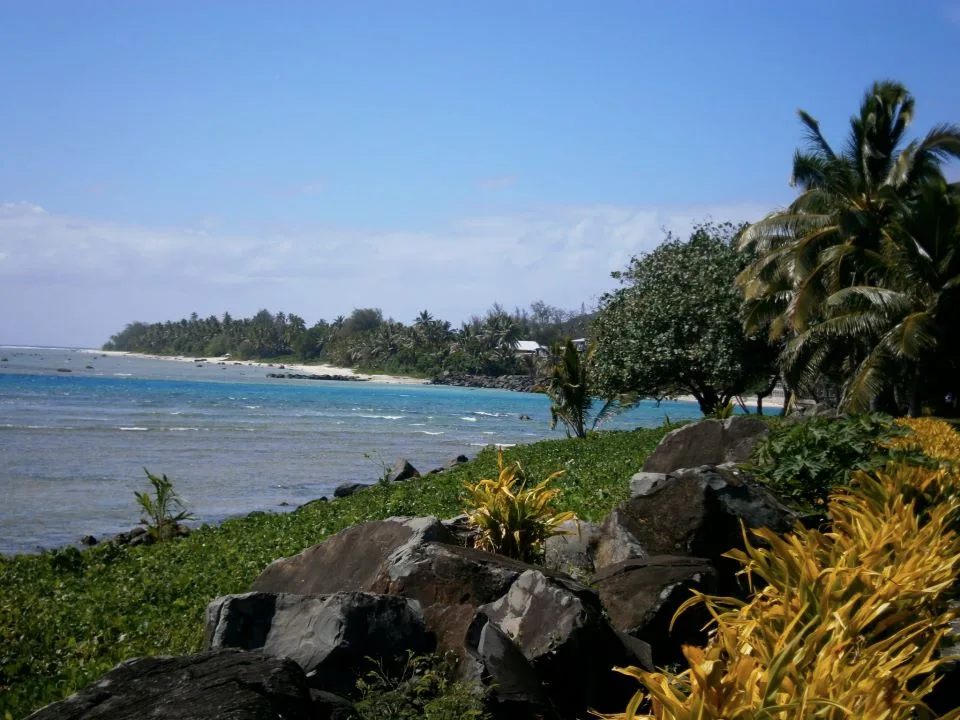
A coastal landscape on Rarotonga. Geographic context for the Cook Islands; this is not an image of a tīvaevae.
Barbara Ratusznik/AusAID · Image record · CC BY 2.0 · Resized and converted to WebP.
Which textile is being discussed?
Te Papa describes tīvaevae as sewn textiles with practical, decorative and gift-giving uses. Its account distinguishes several techniques and documents a work by Tapaeru Skinnon with a hibiscus pattern.
An account with stated limits
The account cautiously suggests an introduction through missionaries’ wives in the early nineteenth century. It also describes sewing groups in New Zealand.
How to discuss a pattern
Research guidance · Pasifika AI
First describe what you can observe: joined pieces, sewn shapes, colours and documented dimensions. To explain a pattern’s choice, look for the maker’s account or a record citing it. Do not assign a spiritual meaning to a flower simply because it appears on a Pacific textile. A missing explanation remains a question to investigate.
A research task for educators
Research guidance · Pasifika AI
Ask learners to compare a museum record with a photograph of the same object. What can only be learned from the record? Who made the work? What remains unknown? The task develops attribution and source-reading skills, without copying a pattern or asking AI to invent its meaning. Keep the record’s title and link in the bibliography.
Try a closer reading
Research guidance · Pasifika AI
Read one quilt’s collection record and separate the named maker, materials, date and documented occasion. Ask what a photograph reveals about colour and construction, and what it cannot establish about relationships or gifting. Leave gaps visible instead of assigning a generic symbolism to every flower.