Lapita pottery: separate evidence from hypotheses
How does a potsherd become part of a historical argument? Follow the steps from an observed layer to an interpretation, keeping their different levels of certainty visible.
Pasifika AI / Kanaky Tech ·
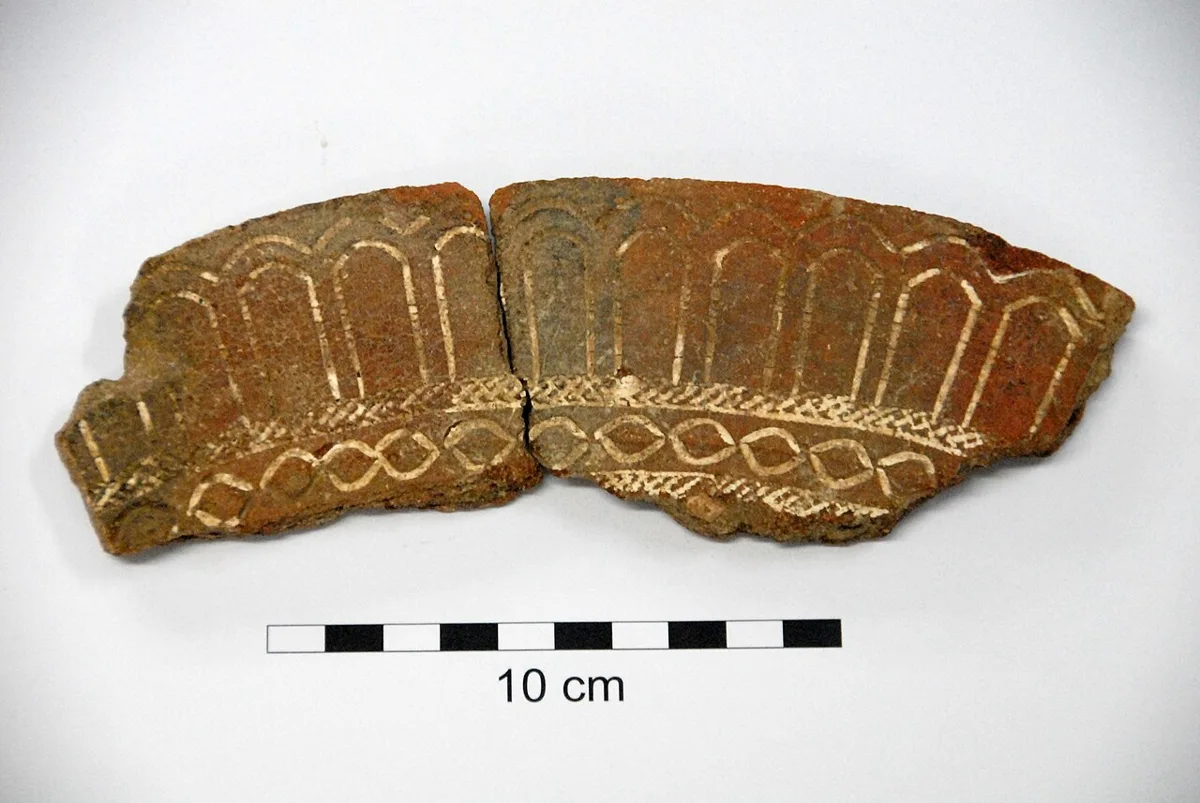
Decorated pottery fragment from Bourewa, Fiji, with a scale. This comparative image is not the New Britain excavation discussed in the article.
Patrick Nunn · Image record · CC BY-SA 4.0 · Resized and converted to WebP.
The documented starting point
In a 2014 Australian Museum article, archaeologist Robin Torrence discusses Lapita-style pottery in New Britain, Papua New Guinea. She reports archaeological layers associated with volcanic events and offers an interpretation of innovation after disruption. The proposed explanation is presented as a theory, not a settled account of all Pacific settlement.
Source : Robin Torrence — Australian Museum, Lapita pottery and volcanic disasters (2014)
A closer reading
Research guidance · Pasifika AI
Divide your notes into finds, dating and explanation. Put a reported object or layer in the first column, the method and date in the second, and the author’s proposed relationship in the third. Preserve words such as “suggests” when summarising a hypothesis. A map of archaeological sites should include its source and time range; it should not be presented as a map of modern ethnic identity. To continue, follow the article’s research reference and compare what the technical study actually tests.
Preserve the author’s level of certainty
Research guidance · Pasifika AI
A summary should not turn “the author proposes” into “archaeology proves”. Quote no more than necessary, then explain the distinction in your own words. In a research card, keep the observed sequence of layers separate from an explanation of why people changed their practices. An explanation can be valuable and open to debate at the same time. This is how a guide can be informative without claiming to settle a field of research.
What this guide does not establish
Research guidance · Pasifika AI
This page cannot assign ancestry from a pottery design. It does not reproduce human remains or treat an archaeological category as a complete description of living peoples.