Vanuatu sand drawings: meaning and transmission
Understand Vanuatu sand drawings, their transmission and why a decorative reading is incomplete, with a named UNESCO reference and research questions.
Pasifika AI / Kanaky Tech ·
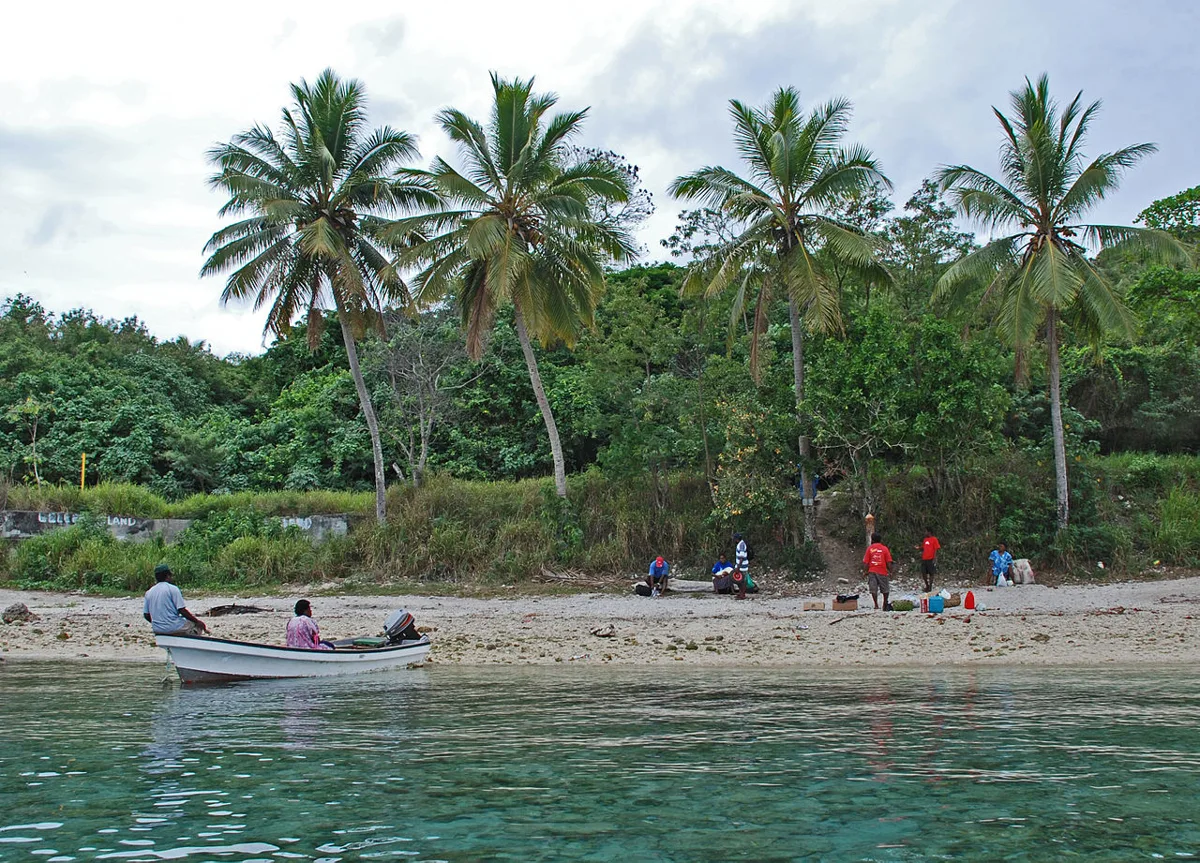
A landing place on Efate used for travel to Lelepa, as described by the photographer. It is not a photograph of a burial or sand-drawing ceremony.
Phillip Capper from Wellington, New Zealand · Image record · CC BY 2.0 · Resized and converted to WebP.
What are these drawings?
In Vanuatu, sand drawing is a graphic practice that also conveys knowledge and stories. UNESCO describes continuous lines drawn with a finger in sand, ash or clay, notably in the central and northern islands.
Why context matters
UNESCO emphasises the relationship between patterns, knowledge and interpretation. Treating drawings simply as decoration can obscure their social role and meanings.
Build a presentation around a drawing
Research guidance · Pasifika AI
For your research, choose an example with an identified maker, place and commentary. Separate three things in your notes: what the image shows, what its presenter explains, and what you infer. If only the image is available, record that its meaning is not established by your documentation. This approach avoids turning a visual resemblance into a cultural interpretation.
A useful follow-up question
Research guidance · Pasifika AI
Ask: ‘What does the UNESCO file say about the transmission of Vanuatu sand drawings, and what information is missing to explain this particular drawing?’ Supply the example’s link. For a logo, video or activity, investigate reuse conditions and the holder’s guidance separately; a citation is not permission.
Try a closer reading
Research guidance · Pasifika AI
Compare a still image and a documented account of a drawing’s performance. List what the image cannot tell you: the explanation, language, occasion and permissions. A classroom description can explain those gaps without copying the design or claiming to teach its meaning.