Levuka: whose history does a port town tell?
Look beyond the postcard street. Reading Levuka means asking who lived, worked and held power around the harbour.
Pasifika AI / Kanaky Tech ·
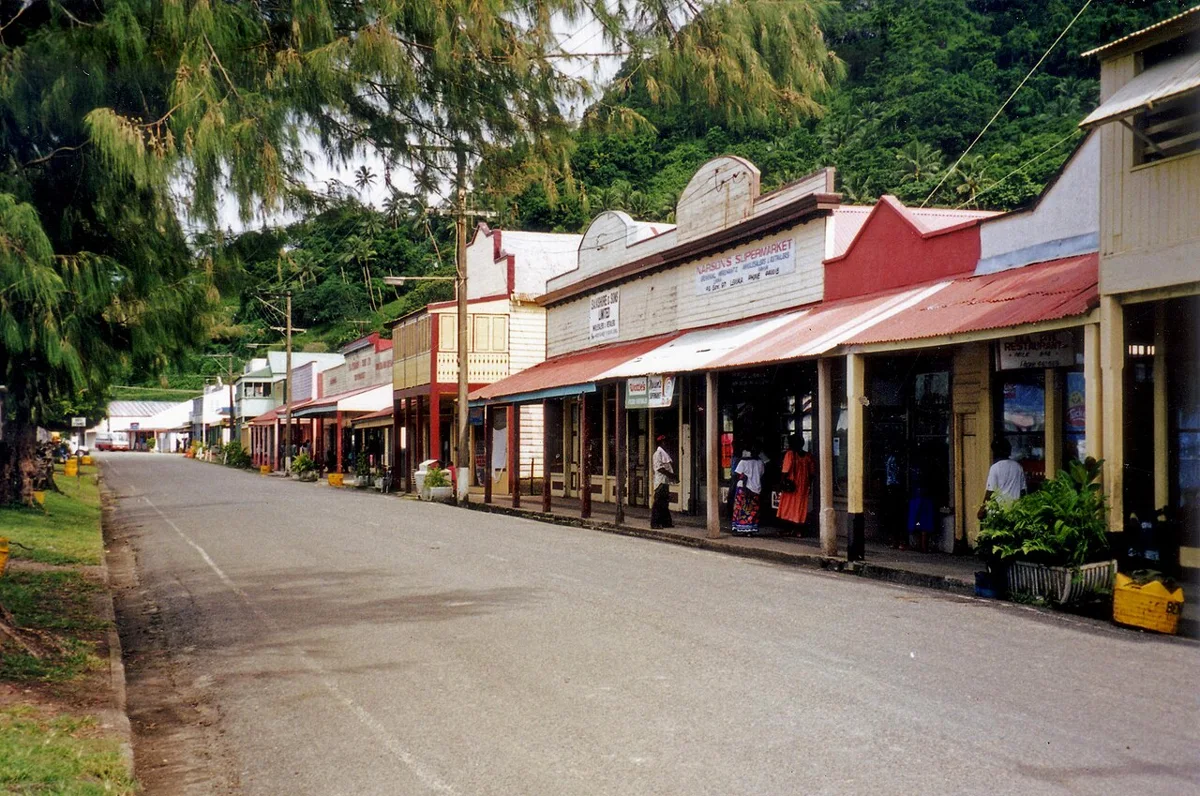
Beach Street, Levuka, photographed in 2000. The image documents a street view, not the town’s whole history.
Anton Leddin · Image record · CC BY-SA 3.0 · Resized and converted to WebP.
The documented starting point
Levuka, on Ovalau in Fiji, was the country’s first colonial capital. The UNESCO account describes commercial and institutional buildings developing around Indigenous villages. The capital moved to Suva in 1882. The town’s layout records both colonial expansion and the influence of its Indigenous community.
Source : UNESCO — Levuka Historical Port Town
The waterfront and the villages
The heritage record identifies Beach Street and the former village sites of Totoga and Nasau. Its description includes commercial buildings, homes and institutions. This range of places explains why a single architectural landmark cannot summarise Levuka.
Source : UNESCO — Levuka Historical Port Town
A closer reading
Research guidance · Pasifika AI
Choose one building and one village site named in the heritage record. Write a short description of their function before discussing appearance. Track the difference between a building’s construction date, the date it changed use and the date of a heritage listing. For an engaging comparison, put a historic street image beside a recent one and label only changes you can actually see. Leave ownership and personal histories for evidence from named records or residents.
Read a street in layers
Research guidance · Pasifika AI
Imagine preparing a walking-history handout from a street photograph. Number only the buildings you can match to documented records. Leave the others unlabelled rather than guessing. Add a second line for the people and uses recorded at each place, then a third for the source date. The result is a small evidence map. It can show where further local research is needed instead of pretending the visible architecture tells the whole social history.
What this guide does not establish
Research guidance · Pasifika AI
A heritage description is not a complete account of colonisation. Avoid describing the town as an empty stage discovered by Europeans. Present the limits of the record and seek Fijian interpretations alongside architectural history.